
Out of Bounds: How Adult Behavior Is Eroding Youth Sportsmanship
Kathleen Houssels — April 12, 2026
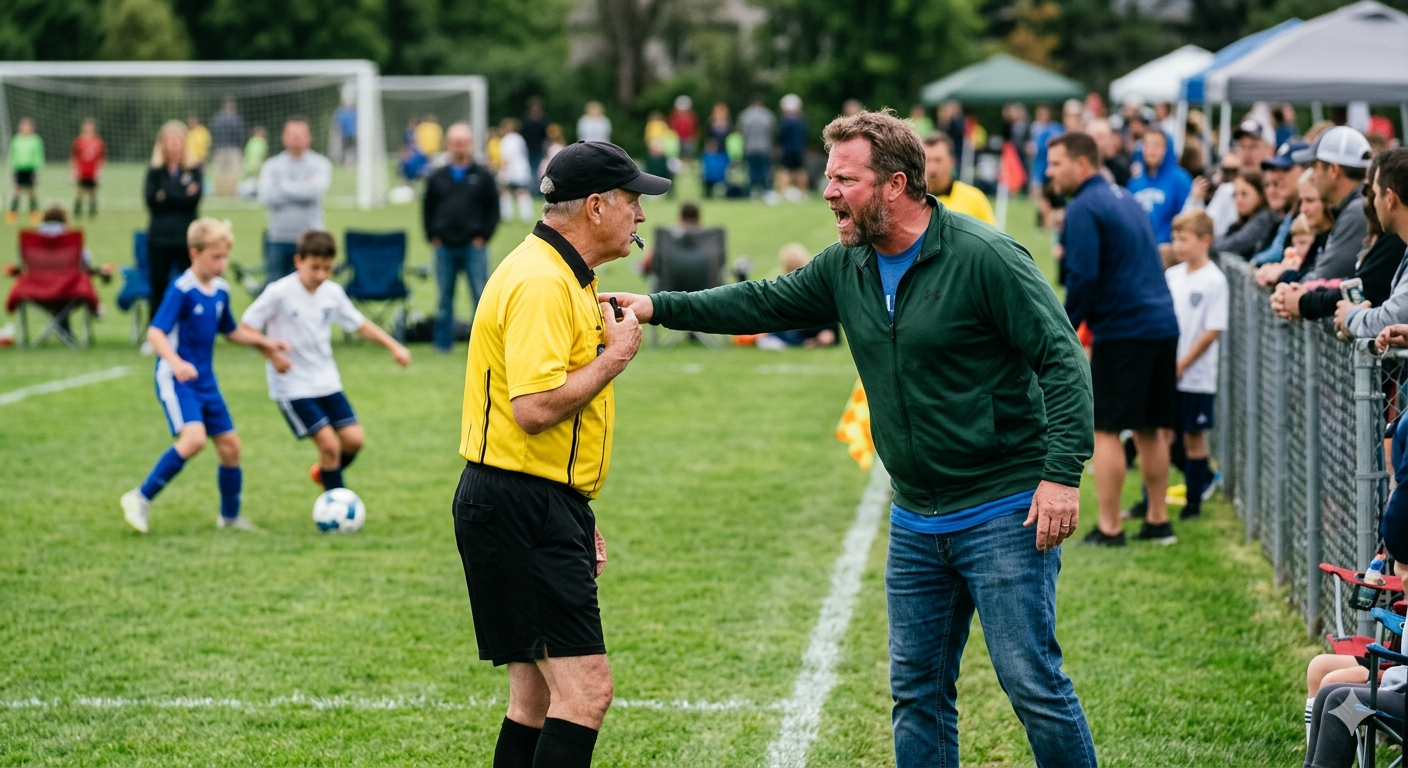
Youth sports are supposed to teach children how to compete. Increasingly, it's the adults who need the lesson.
As costs rise, ambitions inflate, and competition intensifies, the adults on the sideline are increasingly becoming the story. The average San Francisco Bay Area family with two children in sports now spends over $5,610 a year — and opting out can feel like falling behind. The expansion of NIL rights, the corporatization of youth athletics, and elite travel leagues have professionalized a landscape once defined by Saturday morning recreation. And while fewer than 2% of youth athletes will ever play Division I sports, more than 22% of parents believe their child will.
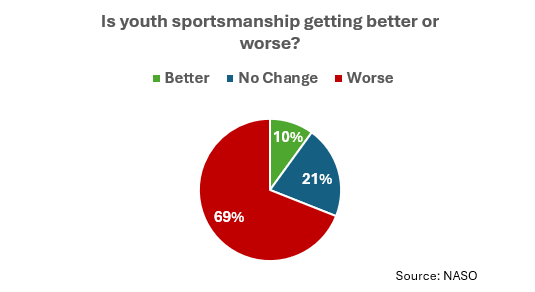
69% of sports officials say youth sportsmanship is getting worse. Only 10% say it's getting better.
To understand what's really happening on the sideline, we turned to the one group watching all parties — players, parents, and coaches — without a stake in the outcome: the officials keeping score.
____________
The View From the Field
The data backs up what many already suspect. The National Association of Sports Officials (NASO) Sporting Behavior Survey draws on responses from more than 35,000 officials at every level of competition — and it points a clear finger at adult behavior as the driving force behind deteriorating conditions in youth sports.
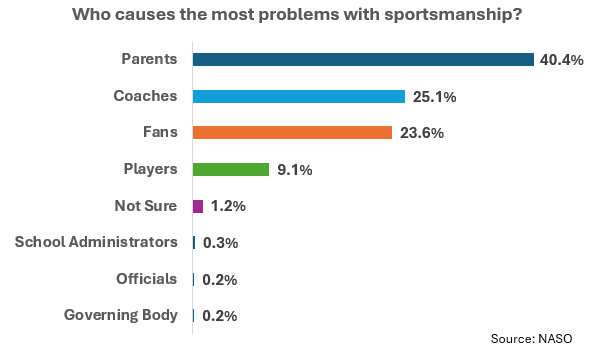
40% of youth sports officials say parents cause the most sportsmanship problems — compared to 25% for coaches and just 9% for players. Fans rank third at 23.6% — a category that, at the youth level, is largely made up of parents themselves. Combined, the adult presence on the sideline is responsible for the overwhelming majority of sportsmanship issues.
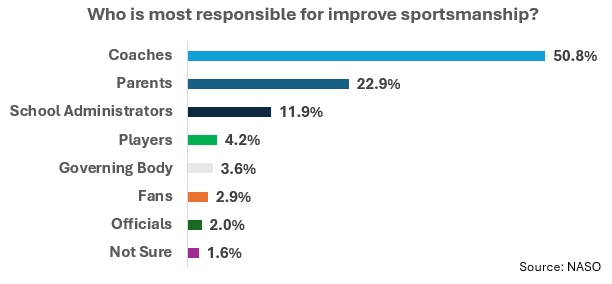
Despite identifying parents as the leading cause, officials largely believe coaches bear the greatest responsibility for improving sportsmanship — followed by parents, school administrators, and then players.
The trend is no more encouraging: 69% of youth sports officials believe sportsmanship is getting worse. Only 10% believe it is getting better.
Moreover, a majority have had to personally intervene to break up a fight. In California, 65% of officials report having stepped in to separate combatants — and 15% have been physically assaulted by a fan, coach, or player.
____________
Where Is Sportsmanship Worst?
Counterintuitively, officials identify competitive youth sports — not professional or college athletics — as the level where sportsmanship is by far the most problematic. When asked to identify the worst level, travel leagues and club sports ranked first by a wide margin:
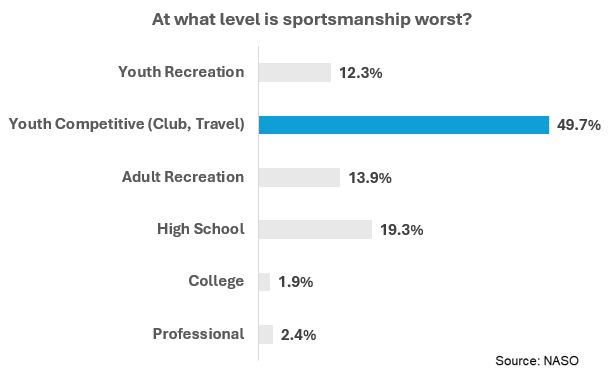
The dynamic at the competitive youth level may help explain the gap. Without the same level of institutional oversight as high school or college sports, club and travel leagues have fewer structural checks on sideline behavior — and the perceived stakes can feel just as high.
Competitive youth sports rank worst across all sports, not just in the aggregate. Among competitive youth athletics, officials identified ice hockey, basketball, and baseball as having the most pronounced sportsmanship challenges:
Ice Hockey — highest rate of reported sportsmanship issues among competitive youth sports, and ranks particularly high on fights and cases of physical assault
Basketball — second highest, with sideline behavior cited as a particular concern
Baseball — third highest among competitive youth sports
____________
The Referee Retention Crisis
The consequences of this environment extend beyond individual incidents. Youth sports are facing a structural problem: a shortage of willing officials, driven in large part by the treatment they receive on the sideline.
Data from U.S. Soccer's Referee Assistance Program (RAP) illustrates the magnitude of the problem:
90% of referees report that abuse from adults has increased over the past five years.
60% of referees who do not recertify cite harassment and threats as their primary reason for leaving — not time constraints or scheduling conflicts.
The cumulative effect is a shrinking pool of available officials for youth sports.
____________
Local Solutions
The shortage of officials is a clear sign of how far the problem has extended — and how much work remains.
Several Bay Area leagues have taken meaningful steps to address the problem. Across the region, organizations have implemented concrete policies designed to hold adults accountable — a few examples:
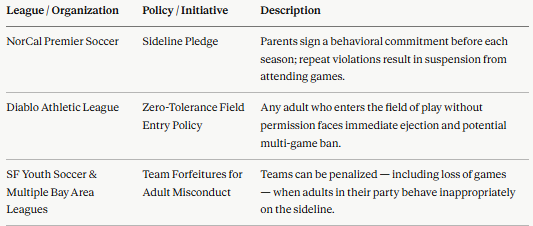
What distinguishes these policies is accountability — each moves beyond awareness campaigns to create enforceable consequences for misconduct.
____________
