
Planned Parenthood vs. Pregnancy Centers
May 3, 2026
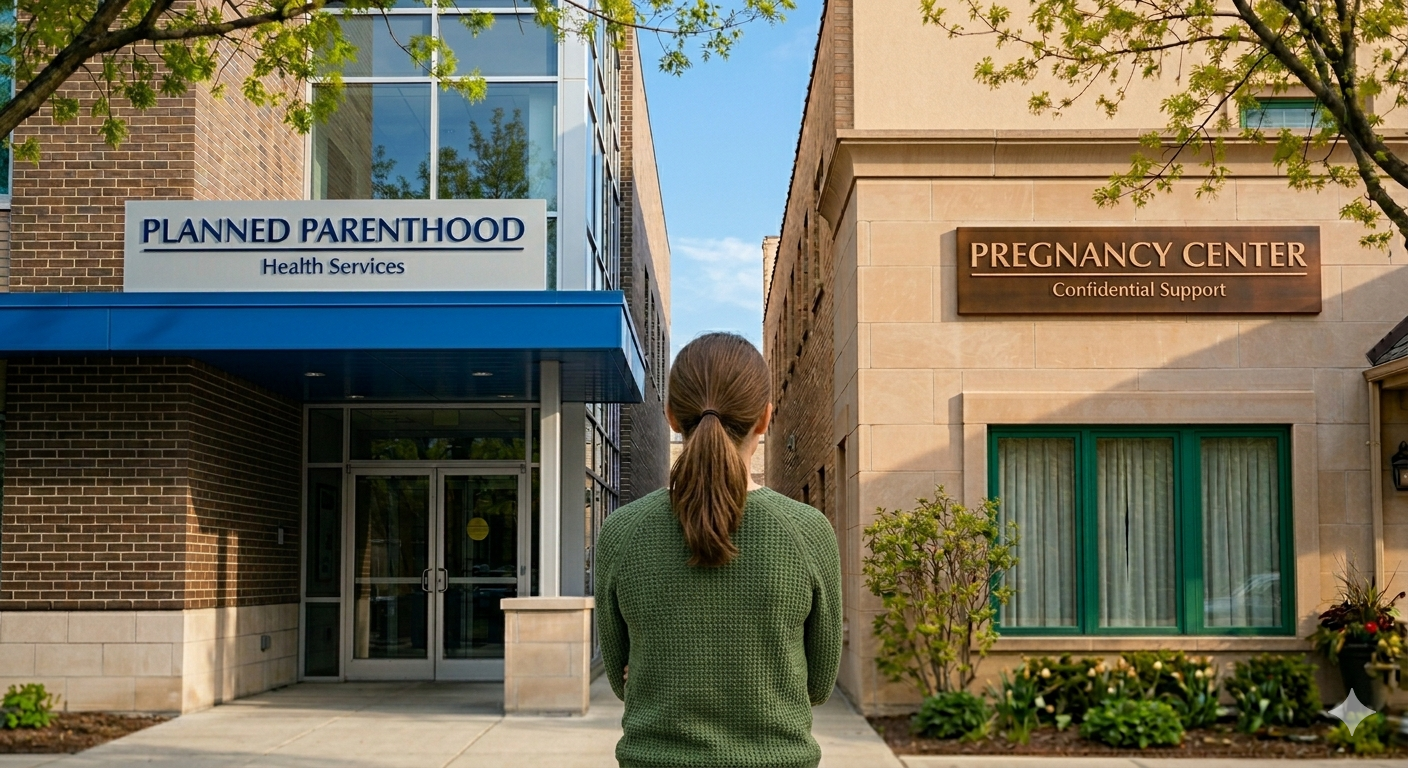
Right now, two types of local organizations are both in the middle of a reinvention — for very different reasons. One, facing a sudden loss of federal funding, has closed several clinics and begun offering cash-pay cosmetic services to stay financially viable. The other, responding to the rise of at-home abortion pills, has been quietly building out medical labs and ultrasound equipment to deepen its clinical credibility.
__________
Two Very Different Models
To understand what's happening, it helps to start with how these organizations are structured — because their funding models explain why they are changing.
Planned Parenthood
Planned Parenthood is a national nonprofit network of affiliated healthcare clinics. In the Bay Area, services are operated through two affiliates: Planned Parenthood Mar Monte and Planned Parenthood Northern California. Historically, Bay Area Planned Parenthood clinics have offered contraception, STI testing, and abortion services, relying heavily on Medicaid (known as Medi-Cal in California), Title X federal family planning funds, and private donations.
This funding structure made PPMM highly sensitive to changes in federal policy — a vulnerability that became very real in 2025.
Pregnancy Resource Centers
Pregnancy Resource Centers (PRCs) — sometimes called Crisis Pregnancy Centers (CPCs) — are typically pro-life nonprofits that offer counseling, material support (diapers, baby clothing, formula), and increasingly, licensed medical services to women facing unplanned pregnancies. They do not perform abortions.
Unlike Planned Parenthood, PRCs are funded almost entirely through private donations, church networks, and community fundraising. This independence from government funding has, in a notable twist, insulated them from the policy disruptions that have shaken Planned Parenthood over the past year.
__________
Where are They in the Bay Area?
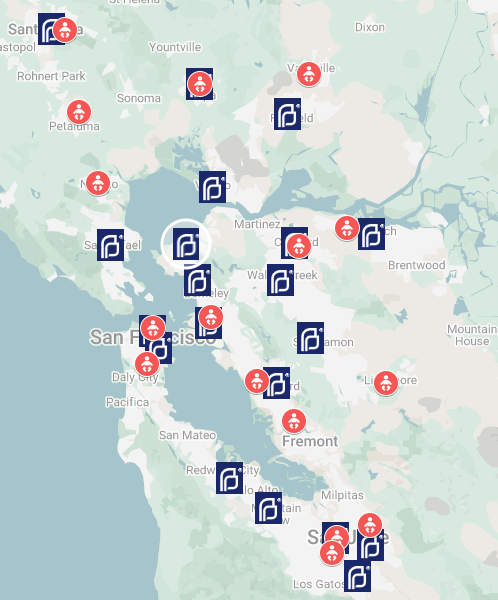
Planned Parenthood operates 19 clinics across the Bay Area. There are 16 Pregnancy Resource Centers serving the same region. Both are spread across nine counties — but not evenly.
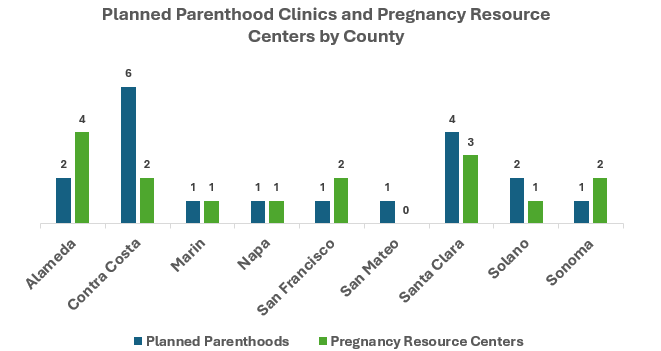
Santa Clara County has the highest combined total of both types of organizations, with 4 PP clinics and 3 PRCs. Alameda is the only county where PRCs outnumber Planned Parenthood, with 4 centers compared to 2 clinics. The most striking gap is in Contra Costa, which has the highest PP concentration in the Bay Area — 6 clinics — but only 2 PRCs.
But county-level numbers don't tell the whole story — location within a county matters just as much.
Planned Parenthood's Pivot: New Revenue Streams
Facing an uncertain funding future, Planned Parenthood has begun diversifying its revenue through services that operate outside the Medicaid system entirely.
Botox and Dermal Fillers
In March 2026, Bay Area Planned Parenthood clinics launched a pilot program offering elective cosmetic services — specifically Botox injections and dermal fillers — at locations in San Francisco, Oakland, San Jose, and Mountain View. These are cash-pay services, not covered by insurance.
The logic is straightforward: cosmetic services are not subject to federal Medicaid restrictions, generate immediate revenue, and attract a higher-income demographic. Whether this represents a savvy pivot or a departure from mission is a question different observers answer differently.
Gender-Affirming Care
Bay Area Planned Parenthood clinics have also expanded their Gender-Affirming Care services, including hormone therapy and related treatments. Many of these are covered by private insurance or California state funding programs — offering a more stable revenue stream unaffected by the federal Medicaid restrictions tied to abortion provision.
__________
Pregnancy Resource Centers: Building Medical Credibility
While Planned Parenthood has been navigating financial turbulence, Bay Area Pregnancy Resource Centers have been quietly investing in medical infrastructure — driven largely by a shift in how abortions are obtained.
The Rise of Chemical Abortion
Medication abortion — the drug combination mifepristone and misoprostol, often called the "abortion pill" — now accounts for the majority of abortions in the United States. Telehealth services and mail-order pharmacies mean women can access these medications at home, without visiting a clinic.
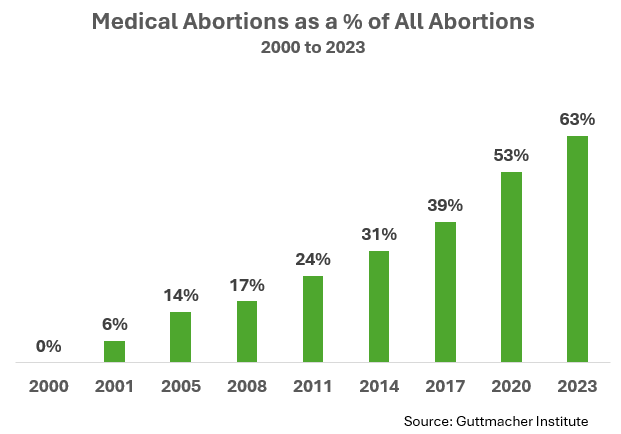
PRCs have responded by offering something a telehealth provider cannot: in-person, clinical-grade care.
From Counseling to Clinical Care
The most significant trend among California's PRCs has been a transition from peer counseling into licensed medical services. Today, the majority offer medical-grade diagnostic ultrasounds, along with STI testing, clinical pregnancy confirmation, and obstetric referrals. This positions PRCs not as alternatives to professional healthcare, but as entry points into it.
__________
Conclusion
What's unfolding in the Bay Area is not one story, but two — each driven by its own set of pressures. Planned Parenthood is moving toward a hybrid model of elective aesthetics and specialized care to maintain its infrastructure. Pregnancy Resource Centers are deepening their clinical roots — driven largely by the rise of at-home medication abortion, which has made it easier to end a pregnancy without ever encountering the in-person support these centers exist to provide.
Both are proving willing to fundamentally change how they operate. But as medication abortion moves further into the privacy of the home — away from clinics, counselors, and clinical oversight — the question of who reaches these women, and when, becomes increasingly pressing.
