
Why Youth Sports Has Become a Father's Second Job
June 21, 2026
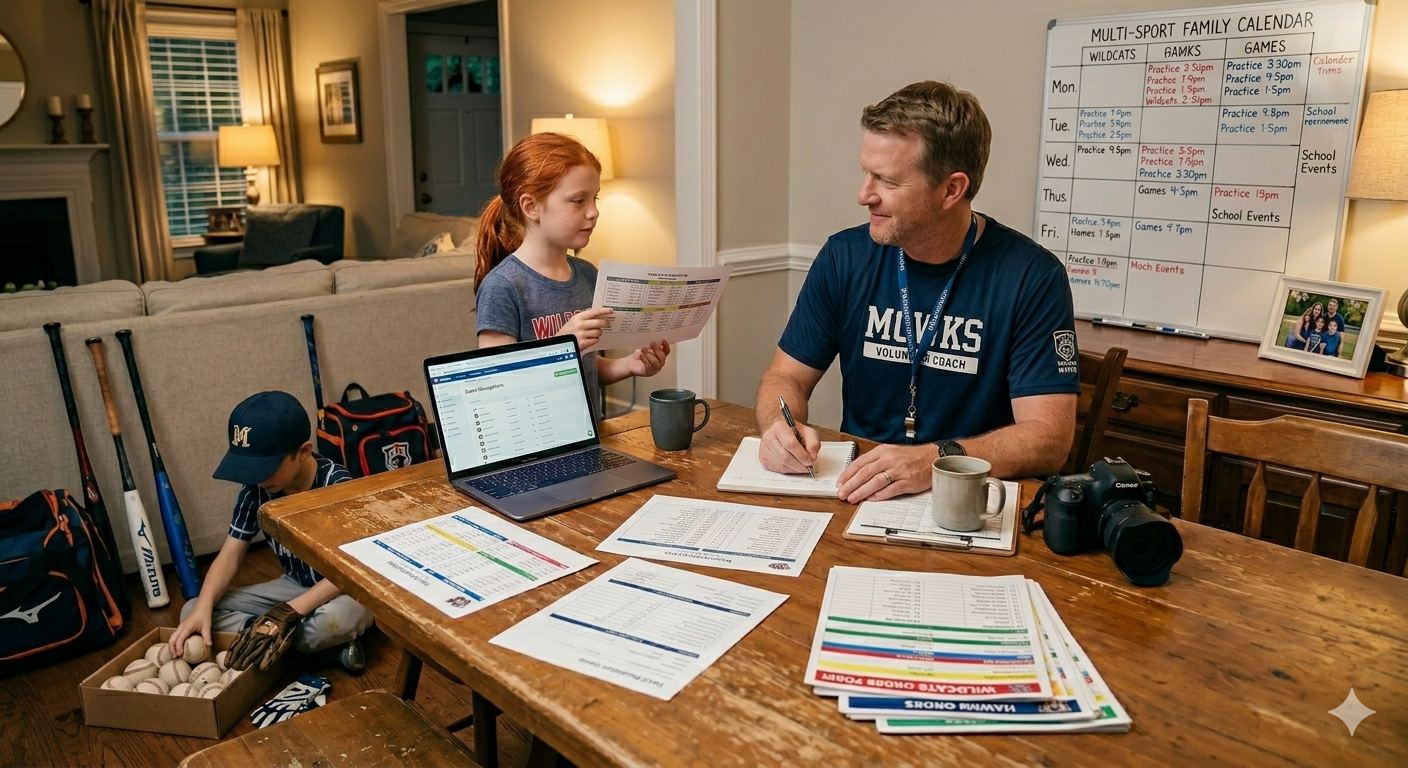
The image of the sports dad is a familiar one: the backyard games of catch, the shared sports milestones, and the cheers from the stands. But beneath those classic scenes lies an intense reality for fathers with children and teens who play sports.
Driven by the rapid commercialization of elite travel leagues, year-round specialization, and regional tournament circuits, youth sports has evolved from a casual childhood hobby into a multi-billion-dollar enterprise. For fathers navigating this landscape, managing a child's athletic development is no longer just a parenting baseline. It has become a literal second job — one measured in early morning drives, endless tournament weekends, and a price tag that keeps climbing.
Today's sports dads show up as coaches, drivers, and strategists — quietly building their kids' futures one weekend at a time.
____________
The Real Cost of Play
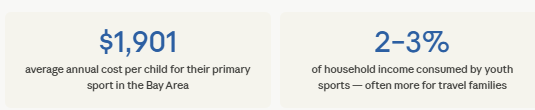
For a growing segment of fathers, the "second job" of youth sports is not a metaphor — it is a line item. As we explored in The Rising Cost of Youth Sports, in the Bay Area the average cost of a child's primary sport runs $1,901 per year, and for families deep in the travel sports world, youth athletics routinely consume 2 to 3 percent of household income, sometimes more.
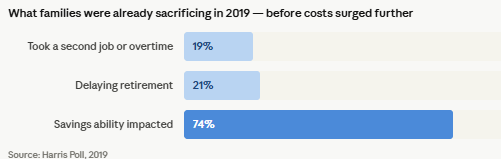
A Harris Poll from 2019 — well before the post-pandemic surge in youth sports costs — reveals that even then, fathers were making structural changes to their own financial futures just to keep their children on the field. Nearly one in five had taken a second job or worked overtime. More than one in five was delaying retirement. And nearly three-quarters said their ability to save had taken a hit.
____________
The Invisible Work: Time, Miles, and Mental Load
The financial cost is only part of the story. For every dad writing bigger checks to fund the journey, there are thousands more also absorbing the second shift in hours, miles, and the relentless mental load of keeping everything on track.
The numbers are striking. According to the Aspen Institute's Project Play, the average sports parent logs 3 hours and 23 minutes every single day their child has a practice, game, or tournament. And that clock starts well before they pull out of the driveway — covering a range of tasks that no one sees but everyone depends on.
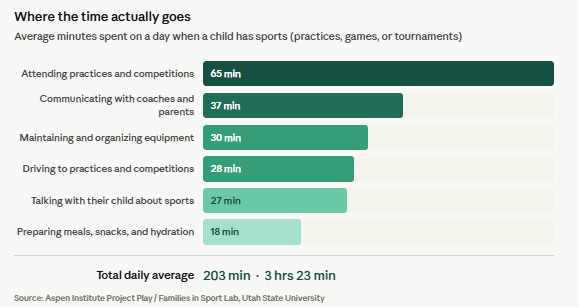
When the weekend arrives, there is no off switch. For fathers juggling multiple children, the challenge compounds — holding space for a younger sibling's needs while managing the demands of a competitive athlete is its own full-time act of coordination. And with elite programs routinely stacking three team practices, two individual training sessions, and a multi-day tournament into a single week, "the weekend" stops meaning what it used to.
____________
The Motivation: Why Dads Keep Showing Up
Why do fathers willingly sign up for a second shift with no financial compensation, zero paid time off, and nothing left over by the end of a long day?
For many, the answer has less to do with athletics than access. The long car rides, the shared hotel rooms, and the celebrations after a hard-earned win aren't just byproducts of the sports schedule — they are the point. Youth sports creates a recurring space where fathers and children are simply present with each other, week after week, year after year. It's love, expressed through showing up.
The data backs up what most sports dads already feel. According to a First Tee and Harris Poll survey:
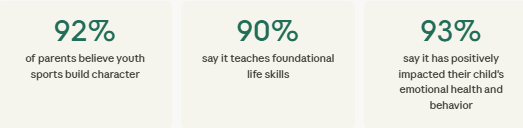
But that love gets complicated. Dads love their kids and want to cultivate their skills — but many also feel a creeping pressure to keep up. And the goals behind that pressure are more grounded than you'd think: according to the Aspen Institute, while 1 in 5 parents believes their child can play Division I sports, and 11% have professional or Olympic aspirations, 53% say the real driver is simpler — just making sure their kid has the skill level to make the high school varsity team.
Most sports dads aren't chasing a scholarship or a contract. They're trying to make sure their kid can keep playing the sports they love. The pay-to-play pipeline has a way of pulling families deeper than they planned — fueled as much by fear of falling behind as by love.
__________
The Lifelong Gifts of Showing Up
What a father does on the sidelines today echoes for decades. Research on father involvement in youth sports shows a clear pattern: small, consistent, encouraging actions in childhood become some of the most durable gifts a parent can give — shaping not just how a kid plays, but who they become.
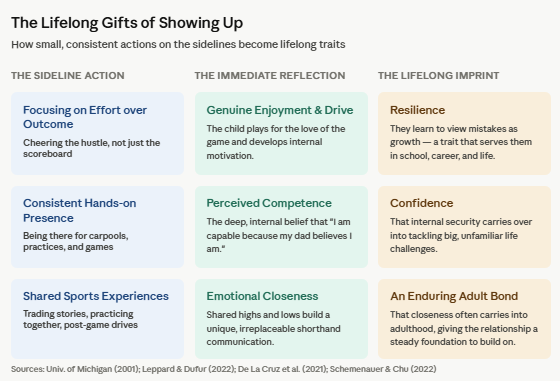
What a father gives, a child carries for the rest of their life.
____________
A Salute to the Dads Working the Second Shift
There are early mornings, long drives, and a price tag that keeps climbing. But for many fathers, what they're really building isn't a professional athlete — it's a relationship that outlasts every season.
So here's to the dads who pull double duty: funding the dreams, driving the endless miles, analyzing the tournament data, and sacrificing their weekends to invest in their children.
Your hard work doesn't go unnoticed.
